Versle | Daily Bible Games
- 4.8
- Rating
- 10.00K
- Installs
- Free
- Price

 Analysis by App-foxy
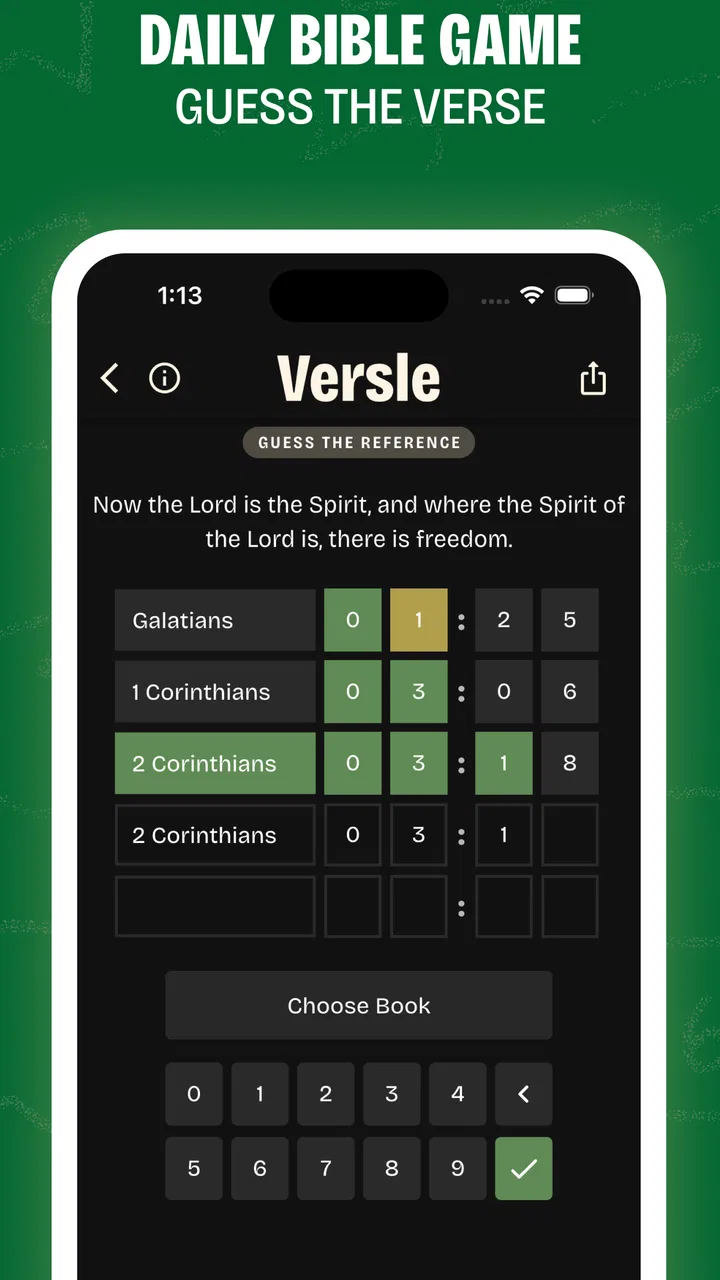
I spent time with Versle | Daily Bible Games as a short, faith-centered trivia game rather than treating it like a traditional Bible study tool. Its appeal is easy to understand: it brings a daily verse, a crossword-style activity, and Scripture memory into one small routine. I found that combination more inviting than opening a large reference app when I only had a few quiet minutes.
The game is made by Toast - Apps & Software LLC and is free to start. It is listed for Everyone, runs on Android versions from 6.0 onward, and has reached over ten thousand installs. Those details place it in an accessible part of the trivia category, especially for families, casual players, and people who want a gentle way to revisit biblical passages without committing to a long session.
What matters most in practice is the rhythm. The daily format gives me a clear reason to return, while the word-based activity makes the experience feel like play instead of a plain reading exercise. I would not describe it as a deep competitive quiz game, but that is also why it works for a particular kind of player: someone looking for consistency, reflection, and light mental effort.
You May Also Like

 AccuWeather: Weather Radar
AccuWeather Review: A Quick, Clear Forecast for Everyday Decisions
For everyday plans, the best forecast is the one you can understand quickly. AccuWeather makes rain timing, radar, and local conditions easy to act on, with a few trade-offs.

 Hill Climb Racing
Why Hill Climb Racing Still Turns Crashes Into One More Run
A tiny car, a bumpy hill and one more upgrade: Hill Climb Racing keeps resurfacing because its simple chaos makes every near-miss feel personal.

 AliExpress - Shopping App
AliExpress Makes Global Shopping Feel Personal, but Shoppers Bear the Risk
AliExpress turns a global marketplace into a pocket-sized discovery engine. Its reach is useful, its shopping loop compelling, and its trade-offs easy to miss.

 Lords Mobile: Kingdom Wars
Lords Mobile Is a Kingdom-Building Routine, Not a Quick Match
A case-by-case verdict on the building, battles, device demands, and social commitments that make Lords Mobile rewarding for some players and exhausting for others.

 PDF Scanner app - TapScanner
TapScanner Makes Paperwork Easier to Capture, Check, and Share
TapScanner makes scanning with a phone feel less like a rescue operation and more like a dependable step in getting work done. Its capture tools are useful, though not flawless.

 Block Blast!
 Shows How Much a Puzzle Game Can Leave Out
A quiet grid game shows why puzzle players increasingly value instant clarity, repeatable skill and low-pressure play—and where the genre still needs to catch up.
More From Our News Desk
View All News


How the daily routine begins
The early goal is straightforward: open the game, engage with the current verse, and complete the available word challenge or memory-oriented activity. That simplicity is useful. I did not have to learn a complicated menu structure or understand a large collection of modes before getting started. The first few sessions feel more like establishing a habit than chasing a major achievement.
The verse gives the routine a calm starting point, while the crossword element adds a practical task. Instead of only reading and closing the app, I have a reason to recall words, notice phrasing, and think about the passage from a different angle. That change in activity is small, but it helps prevent the experience from feeling like a static quotation screen.
I especially like this setup for a morning break or a short evening wind-down. A person can use it before work, during a commute when it is safe to do so, or as a quiet family activity at home. It does not demand the same attention as a full-length game, and the daily structure makes it easier to stop after a useful session rather than losing an hour to endless play.
There is also a practical advantage for people who struggle to maintain a reading plan. A large study schedule can feel intimidating after one missed day. A compact trivia routine feels less demanding, so returning after a break is psychologically easier. I would use it as a doorway into regular Scripture engagement, not as a replacement for a complete reading plan, commentary, or church study.
Small goals that make the first sessions approachable
The strongest early motivation comes from completion itself. Solving a clue, recognizing a familiar phrase, or recalling a verse creates a modest sense of progress without requiring a leaderboard or a dramatic reward. That is a good fit for players who enjoy finishing small tasks and seeing a routine take shape.
My advice is to avoid treating every clue as a test of religious knowledge. Some answers may come from wording and memory rather than from knowing chapter references or historical context. Reading the verse carefully before attempting the word activity can make the puzzle feel less like guessing. It also turns the game into a useful recall exercise: I am not simply looking at the passage; I am trying to retrieve parts of it.
This is one of the more interesting trade-offs. Players who want a conventional trivia format with many unrelated questions may find the focus narrow. Players who prefer a repeated theme will probably appreciate the coherence. The game has a clear identity, and it does not need to imitate a general knowledge quiz to be worthwhile.
What progress feels like in a short session
The progress signals are deliberately gentle. Completing the daily material is more important than building a large collection of visible achievements. That makes the game relaxing, but it also means that players who need constant unlocks, escalating rewards, or a strong competitive ladder may not feel sufficiently pushed.
I see this as a game where progress is measured by familiarity. After several sessions, the benefit is not only that a puzzle was solved. I begin to notice recurring language, remember portions of verses more quickly, and approach the next challenge with more confidence. Those are quiet signals, but they suit the subject better than flashy reward loops would.
A useful personal workflow is to pause after solving and say the key phrase back without looking at the screen. The crossword then becomes a prompt for memory rather than the entire activity. If I am using the game with someone else, taking turns explaining why an answer fits adds a social layer without needing a formal multiplayer mode. This works well with a partner, a parent and child, or a small study group.
That approach also reveals a limitation: the app’s value depends partly on how actively the player engages. Someone who rushes through clues just to mark them complete may receive less from the verse and memory side. The game can encourage reflection, but it cannot create that habit automatically.
How the difficulty develops
The difficulty curve feels more thoughtful when I treat the material as a blend of word recognition and Scripture recall. A familiar phrase can make a puzzle approachable, while less familiar wording asks for closer attention. The challenge is therefore not only about vocabulary. It is also about whether I have actually absorbed the verse in front of me.
This makes the game suitable for beginners, though experienced Bible readers may find some sessions too easy. That is not necessarily a flaw. The app seems designed for repeatable daily contact rather than for proving expertise. If I wanted demanding theological questions, historical context, denominational nuance, or a broad examination of biblical knowledge, I would choose a dedicated quiz or study resource instead.
The crossword format creates a useful middle ground. It gives me enough structure to work from partial knowledge, because intersecting answers can help confirm a guess. At the same time, a player who depends entirely on clues may miss the memory benefit. I found the best balance by solving what I could, checking the verse again, and then returning to the uncertain entries.
That method is one of the app’s less obvious strengths. It turns difficulty into a reason to reread rather than a reason to quit. When a clue does not immediately make sense, the surrounding wording can supply context. In a general trivia game, I might simply move on; here, the subject matter gives me a reason to stay with the passage.
Still, the experience will not satisfy everyone. Players who expect an obvious increase in complexity from one session to the next may find the pacing restrained. A daily puzzle can be meaningful without becoming harder in a dramatic way. The game’s challenge is best understood as steady recall practice, not as an aggressive skill ladder.
What keeps the routine going
The retention pressure comes mainly from the daily structure. A new reason to return is more compelling than an enormous backlog of content when the goal is consistency. I like that the routine can fit into a small gap in the day, because a habit that takes too long is easier to abandon.
There is a subtle tension here. Daily games can encourage healthy regularity, but they can also make a player feel that missing a session is a failure. I would recommend treating the schedule as an invitation rather than an obligation. If I miss a day, the sensible response is to return when convenient, not to let a broken streak erase the value of the whole routine.
The pacing also avoids the exhausting loop common in some mobile games. I am not pushed toward long grinding sessions simply to keep up with other players. That makes Versle a better match for someone who wants a calm daily ritual. On the other hand, it may feel too quiet for anyone who expects constant notifications, escalating events, or a large social competition layer.
Free access lowers the barrier to trying it, but in-app purchases are available from around three dollars to around twenty dollars per item. I would approach those purchases carefully and first decide whether the daily routine genuinely fits my habits. Paying can make sense for a committed user who wants to support the experience or access an optional convenience, but the basic appeal should be clear before spending anything.
The purchase range is worth considering for families as well. Because the content rating is Everyone, the game is broadly approachable, but adults should still make their own decision about purchases on a shared device. The age rating tells me the intended content is general-audience friendly; it does not remove the need for normal household controls around spending.
How it compares with ordinary alternatives
Compared with a standard Bible app, this game offers more interaction and less breadth. A reading app is usually better when I want multiple translations, extensive search, long passages, notes, or structured study. Versle is better when I need a small prompt that gets me reading and recalling rather than browsing indefinitely.
Compared with a general crossword app, it offers a more focused theme and a stronger sense of purpose. A conventional crossword may provide broader vocabulary and a more demanding puzzle culture, while this game connects the clues to Scripture. The choice depends on what I want from the session: pure wordplay or wordplay tied to a faith-based routine.
Compared with a broad trivia game, the scope is narrower but more coherent. I would not open it to test my knowledge of science, sport, entertainment, or world history. I would open it when I want the verse and memory elements to reinforce each other. That specialization is its main reason to exist.
For a study group, I would pair it with discussion rather than use it as the entire lesson. One person can solve a clue, another can explain the remembered phrase, and the group can talk about the passage afterward. That workflow gives the app a role without asking it to provide the depth of a teacher, commentary, or organized curriculum.
Where the experience may frustrate you
The focused design can become repetitive for players who need variety. The daily verse, crossword, and memory theme are appealing precisely because they stay connected, but that connection also limits the range of activities. If I wanted many game modes or a constantly changing set of mechanics, I would probably lose interest sooner.
It may also be a poor fit for someone who prefers private reading without game elements. Some readers will find clues and completion goals motivating; others may feel that turning Scripture into a puzzle distracts from contemplation. Neither response is wrong. The right choice depends on whether interaction helps you pay attention or pulls you away from the text.
Another limitation is that light difficulty can reduce long-term excitement for advanced trivia players. The game’s calm pacing is a strength for habit-building, but it is not the same as a demanding examination. I would skip it if my main goal were to compete, compare scores, master a large knowledge base, or experience a pronounced progression system.
Version 2.15.1 is the current version, and the Android requirement of 6.0 keeps the technical entry point relatively broad. That makes it practical for people using older compatible phones, although the overall appeal still depends more on liking the daily format than on having a newer device.
My verdict on the progression loop
After looking at the goals, progress signals, difficulty, and return rhythm together, I think the progression is intentionally modest. The game does not need elaborate unlocks to make its point. Its loop is built around showing up, reading closely, solving a themed challenge, and gradually improving recall. That is a valid form of progression, even if it is less visible than levels or collectible rewards.
My strongest recommendation is for people who want a manageable faith-based habit and enjoy word puzzles. It is also a good option for someone trying to make Scripture memory less passive. I would suggest starting with a few minutes at a consistent time, reading the verse before solving, and repeating the key wording afterward. That simple routine makes the app more valuable than treating it as a quick answer hunt.
I would be more cautious about recommending it to serious quiz fans, readers seeking detailed study tools, or players who need a large competitive ecosystem. Those users will likely be happier with a specialized Bible reference app, a full crossword title, or a broader trivia game. Versle does not replace those alternatives, and it does not need to.
For me, the best part is the balance between a daily prompt and a small mental challenge. The free entry makes it easy to test, the Everyone rating keeps it approachable, and the high user response—a 4.9 average from nearly nine hundred ratings—suggests that its focused concept connects with many players. I would recommend it to a friend who wants a calm, repeatable way to combine Bible reading with light gameplay, while making clear that its quiet progression and narrow subject matter are features only if those are what the player wants.
FAQs for Versle | Daily Bible Games
01What is Versle | Daily Bible Games?
Versle is a daily game app designed to engage users with Bible-based quizzes and puzzles. It offers a fun and educational way to explore biblical texts and stories through various game formats. Suitable for all ages, it combines learning with entertainment, helping users deepen their knowledge of the Bible.
02Is Versle available on both Android and iOS?
Yes, Versle is available for download on both Android and iOS platforms. Users can easily find it on the Google Play Store for Android devices and the Apple App Store for iOS devices. The app is optimized for both platforms, ensuring a smooth and engaging user experience.
03Does Versle require an internet connection to play?
Versle does require an internet connection to download daily puzzles and updates. However, once the games are downloaded, users can enjoy them offline. This feature makes it convenient for users to play anywhere, without the constant need for an internet connection.
04Are there in-app purchases in Versle?
Yes, Versle offers in-app purchases. While the app provides a range of free content, users can choose to purchase additional features, such as exclusive puzzles or ad-free experiences. These purchases enhance the gaming experience but are not necessary to enjoy the basic version of the app.
05Is Versle suitable for children?
Versle is designed to be family-friendly and suitable for children. The app offers a variety of puzzles that are both fun and educational, promoting learning about the Bible in an engaging way. However, parental guidance is recommended, especially if in-app purchases are enabled.
Pros
- Engaging Bible-based puzzles daily.
- User-friendly interface for all ages.
- Enhances biblical knowledge creatively.
- Offline play available for convenience.
- Regular updates with new content.
Cons
- Limited game variety for long-term play.
- Some features require in-app purchases.
- Occasional ads may disrupt gameplay.
- Requires internet for initial setup.
- Not available in all languages.

Versle | Daily Bible Games
Gallery